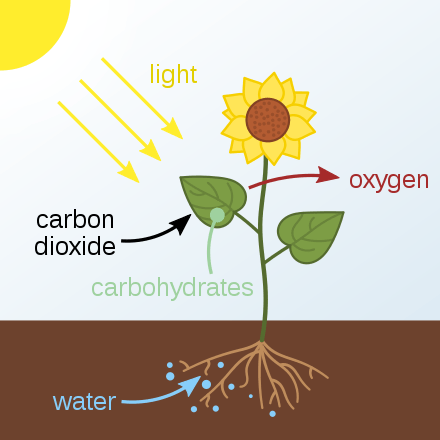
Photosynthesis is a process used by plants and other organisms to convert lightenergy into chemical energy that can later be released to fuel the organisms’ activities. This chemical energy is stored in carbohydrates molecules, such as sugar, which are synthesized from carbon dioxide and water. Hence the name photosynthesis is from the Greek word phōs, “light”, and synthesis, “putting together”. In most cases, oxygen is also released as a waste product. Most plant , most algae, and cynaobacteria perform photosynthesis; such organisms are called photoautotrophs. Photosynthesis is largely responsible for producing and maintaining the oxygen content of the Earth’s atmosphere, and supplies all of the organic compounds and most of the energy necessary for life on Earth.
Although photosynthesis is performed differently by different species, the process always begins when energy from light is absorbed by proteins called reactionscentres that contain green chlorophyll pigments. In plants, these proteins are held inside organelles called chloroplasts, which are most abundant in leaf cells, while in bacteria they are embedded in the plasma membrane. In these lights dependent reactions, some energy is used to strip electrons from suitable substances, such as water, producing oxygen gas. The hydrogen freed by the splitting of water is used in the creation of two further compounds that serve as short-term stores of energy, enabling its transfer to drive other reactions.
By: Blessing Titilayo Ishola. 18/35297 Hnd 2A

 Site Title